Catalog Entries
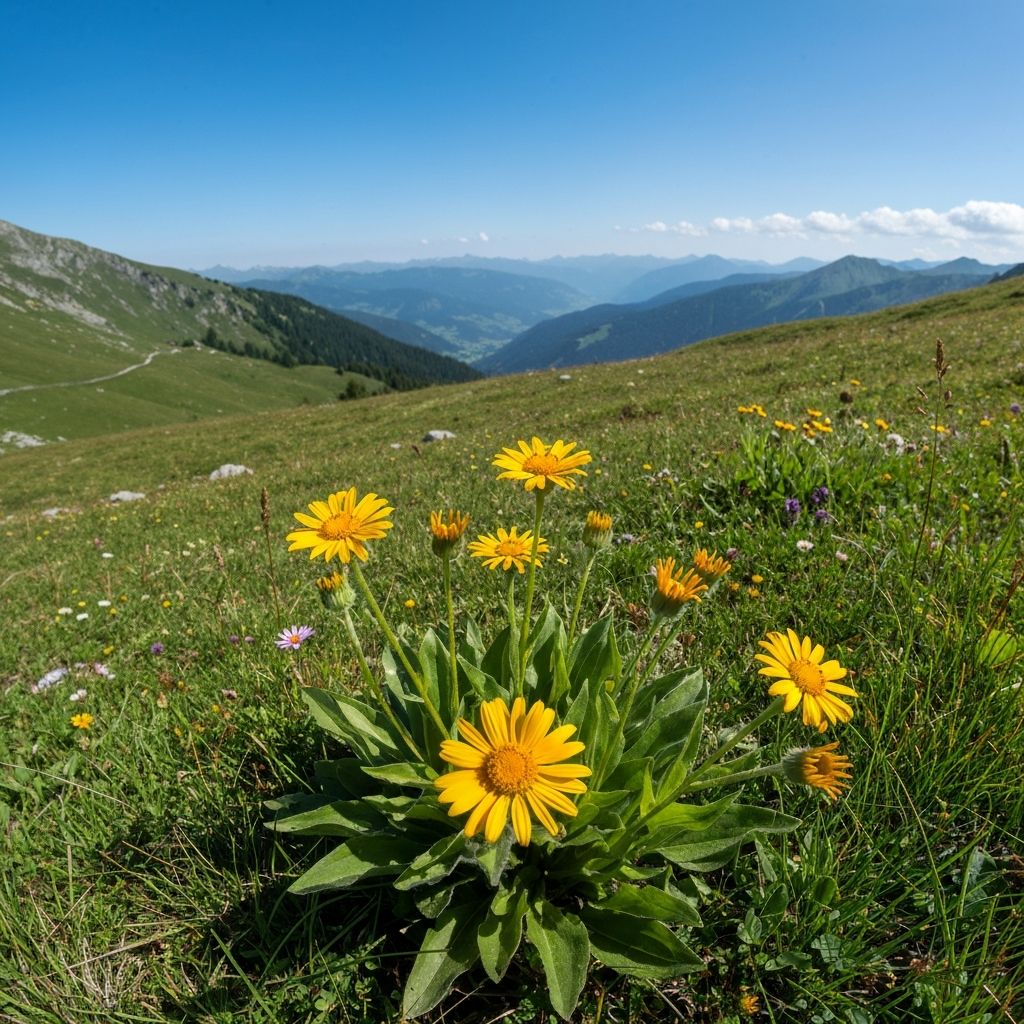
Alpine Arnica Overview
Scientific Name: Arnica montana
Historical Use: Alpine arnica has been documented in European folk medicine traditions for centuries, particularly in mountain communities of Austria, Switzerland, and Germany.
Key Constituents:
- Helenalin (sesquiterpene lactone)
- Flavonoid compounds
- Essential oils (thymol, camphor)
- Polysaccharides
Geographic Occurrence: Mountain meadows and subalpine zones of central Europe at elevations between 600-2,400 meters. Particularly common in Alpine regions.
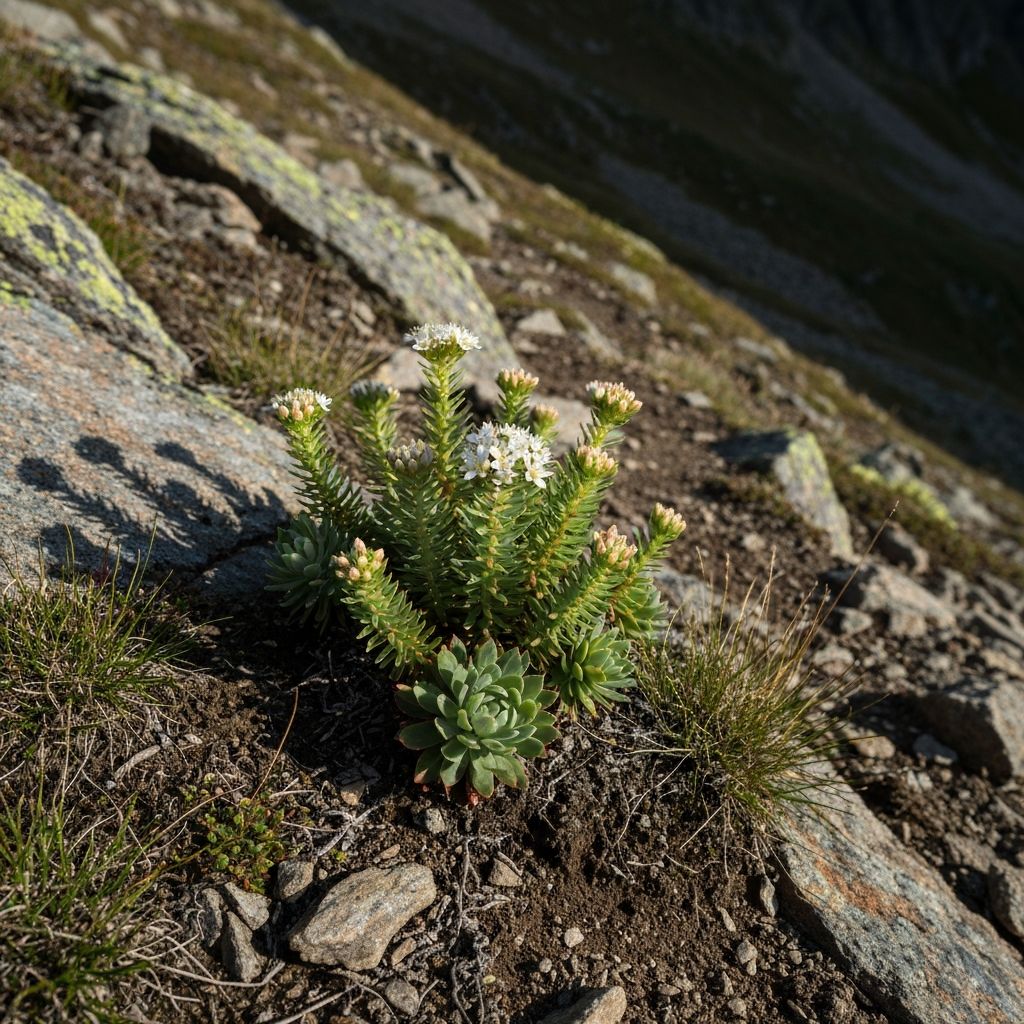
Rhodiola Extract Facts
Scientific Name: Rhodiola rosea
Historical Use: Documented in Scandinavian and Eastern European traditional medicine for over 1,000 years. Particularly valued in Arctic and Alpine regions.
Key Constituents:
- Salidroside (active glycoside)
- Rosavin and related phenolic compounds
- Tyrosol derivatives
- Essential oils and flavonoids
Geographic Occurrence: Subarctic and Alpine regions above 1,000 meters elevation. Found across Northern Europe, Siberia, and mountain ranges.
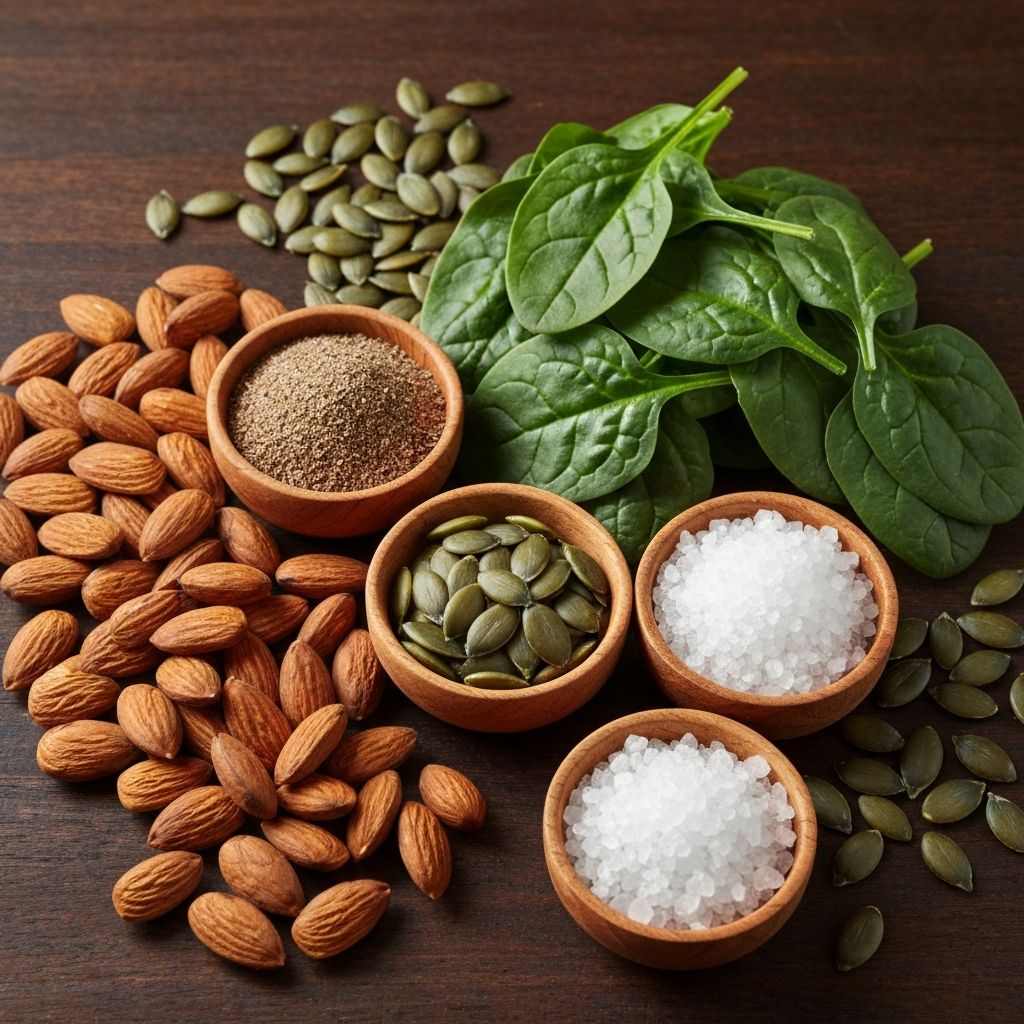
Natural Magnesium Sources
Chemical Identity: Magnesium (Mg), atomic number 12. A mineral essential for over 300 enzymatic reactions.
Historical Context: Magnesium-rich mineral deposits have been harvested throughout Alpine regions. Traditional salts and mineral waters from Alpine sources historically provided this nutrient.
Key Functions:
- ATP energy production (cellular energy)
- Protein synthesis and muscle function
- Nervous system regulation
- Bone mineralization
Natural Food Sources: Almonds, pumpkin seeds, spinach, Swiss chard, sesame seeds, dark chocolate, legumes, whole grains.
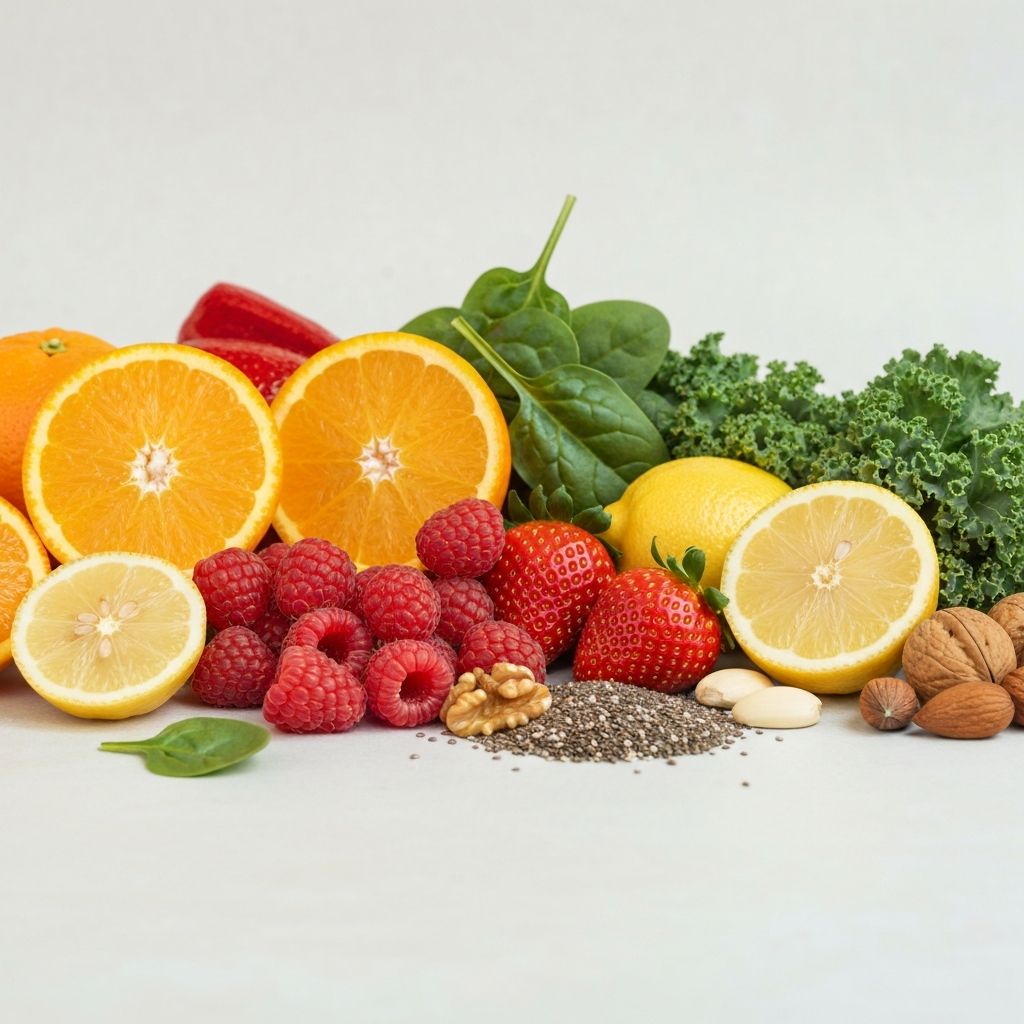
Vitamin Complex from Plants
Overview: Plant-derived vitamin compounds including A, C, E, and B-complex vitamins play diverse roles in human metabolism.
Historical Knowledge: Alpine communities developed detailed understanding of seasonal plant sources providing vitamin-rich nutrition through winter months.
Vitamin Roles in Metabolism:
- Vitamin A: Vision, immune function, skin epithelial health
- Vitamin C: Collagen synthesis, antioxidant defense, immune support
- Vitamin E: Cellular protection, fat-soluble antioxidant
- B-Complex: Energy metabolism, nervous system function
Plant Sources: Leafy greens, bell peppers, citrus fruits, berries, nuts, seeds, whole grains.
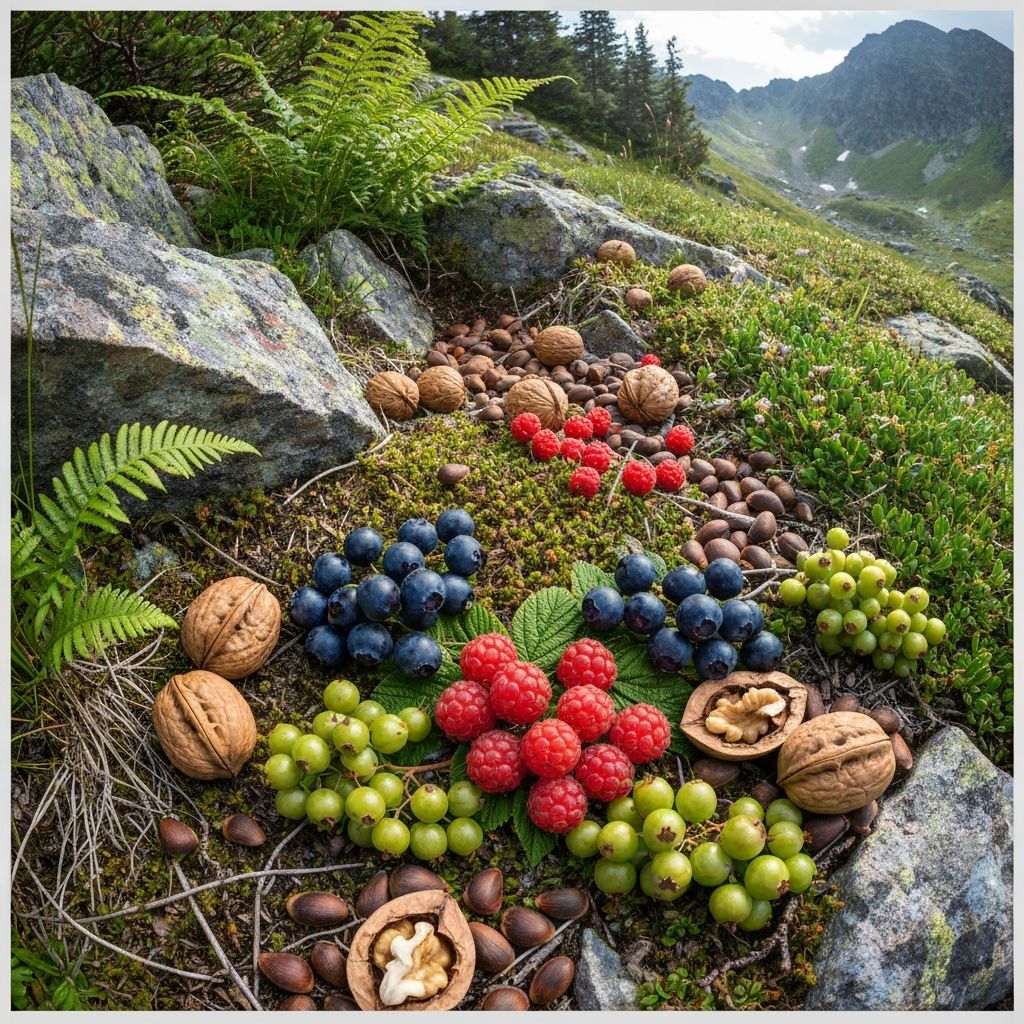
Omega-Rich Alpine Berries
Overview: Alpine berry species contain omega-3 and omega-6 polyunsaturated fatty acids, though in different proportions than marine sources.
Historical Significance: Mountain communities preserved alpine berries seasonally as primary sources of fatty acids during winter periods.
Key Compounds:
- Alpha-linolenic acid (ALA) - plant-based omega-3
- Anthocyanins (polyphenol antioxidants)
- Vitamin C and flavonoids
- Fiber and plant compounds
Alpine Berry Sources: Bilberries, lingonberries, cloudberries, sea buckthorn berries. Also found in seeds: pumpkin seeds, sunflower seeds.
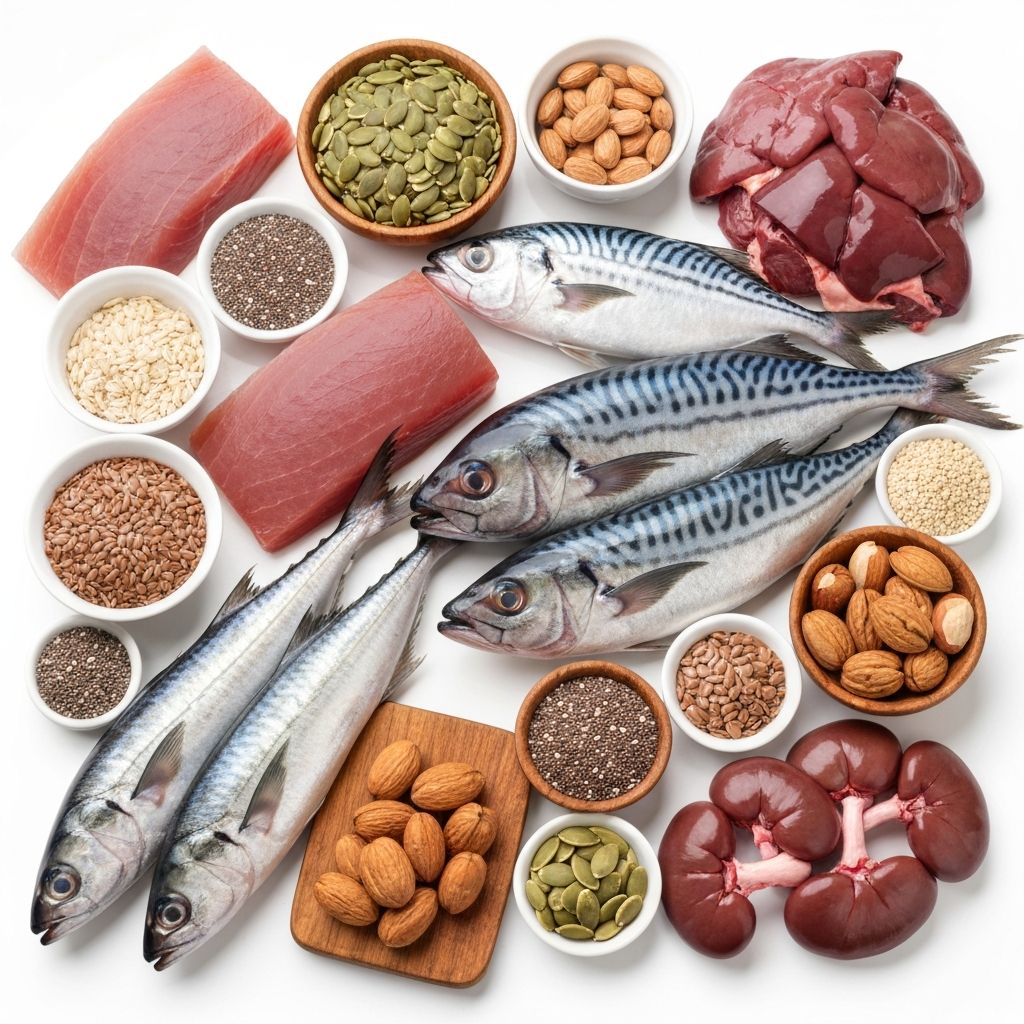
CoQ10 in Nature
Scientific Name: Ubiquinone (Coenzyme Q10)
Discovery Context: CoQ10 was identified through nutritional research into factors supporting cellular energy production and cardiovascular function.
Primary Functions:
- Electron transport in cellular energy (ATP) production
- Antioxidant protection in mitochondria
- Cardiovascular function support
- Cellular energy optimization
Natural Food Sources: Fatty fish (salmon, mackerel), organ meats (liver, heart), vegetable oils, nuts. Plant sources are generally lower in CoQ10 than animal sources.